
 Türkçe
 English
 Français
 Deutsch
How to prepare a document retention plan: from inventory to destruction committee
Every archive project begins with knowing what you have. A retention plan determines which documents are kept for how long, which are destroyed and which are transferred to the State Archives.
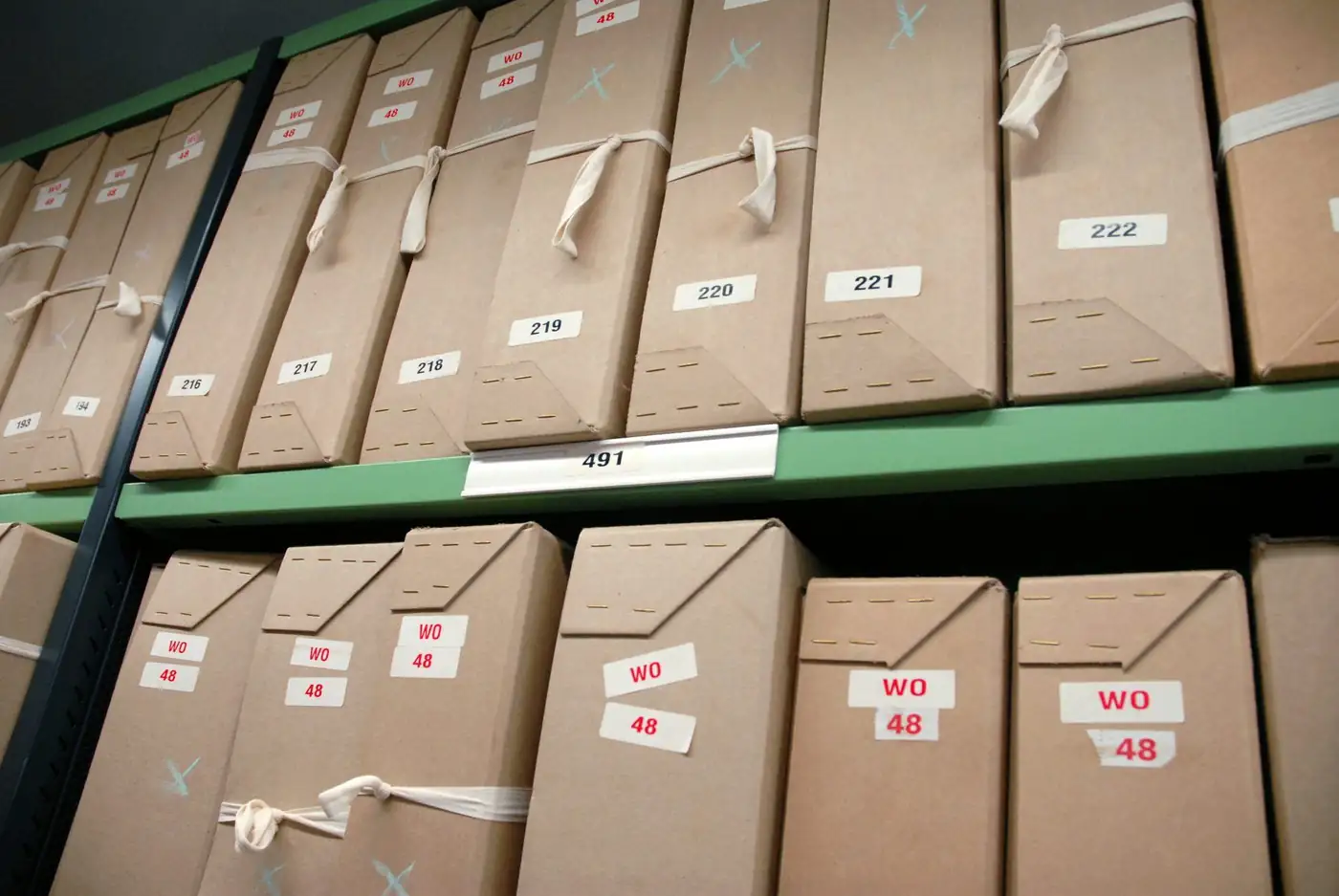
A retention plan is a plan that decides, year by year, how long each document type in an organisation will be kept, how documents past their retention period will be destroyed and how those with research value will be transferred to Turkey’s State Archives. The plan is based on an inventory study and prepared according to legal regulations and archival appraisal criteria.
What is done first for a retention plan?
The way to make the most of archive material and to reach a document in the shortest time is to know first what you have. That is why the work begins with a feasibility study: document information is collected from department representatives using forms tailored to the organisation. At this stage it becomes clear which unit produces which document, in what medium the document is held and how often it is used.
How is a document inventory created?
- Document types are extracted from the survey results.
- For each type, the producing unit, volume and medium are recorded.
- Legal and organisational retention periods are determined.
- The archival (research) value of the document is assessed.
What does a retention plan include?
- Retention period within the organisation: How long the document will be kept in the organisation.
- Destruction: The destruction of documents whose legal period has expired; destruction proceeds with the approval of the organisation’s destruction committee.
- Transfer: The transfer of documents with research value to the State Archives.
How does the destruction committee process work?
The material that must be destroyed is listed first. The list is submitted to your organisation’s destruction committee for approval, and only approved documents are weeded out. In a barcoded physical archive, destruction is carried out by document and by barcode, so it can be traced which document was destroyed, when and by which decision. Weeding out documents due for disposal also reduces the need for new storage.
Who carries out the work?
Dijital Yazılım’s feasibility, inventory and retention plan work is carried out under the consultancy of university academics in Information and Records Management. For the scope of the service, see scientific studies; for organisational support, see consultancy services.
Frequently asked questions
How does a retention plan affect digital archive setup?
The plan determines the volume of documents to be scanned. Because documents past their retention period and due for destruction are not scanned, the time and cost of the digital archive fall. For details, see our digital archive setup guide.
Is there a special retention rule for patient files?
Yes. According to Turkey’s Medical Records and Archive Services Directive for Inpatient Treatment Institutions, patient files must be kept for at least 20 years, and the files must be organised in line with the Colour-Coded System.
Where should you start with your archive?
If you are not sure which step to begin with, we start the first meeting with a feasibility study and an inventory. The digital archive assessment and the initial meeting are free of charge; you can fill in the form on the contact page or call +90 (212) 588 51 44.